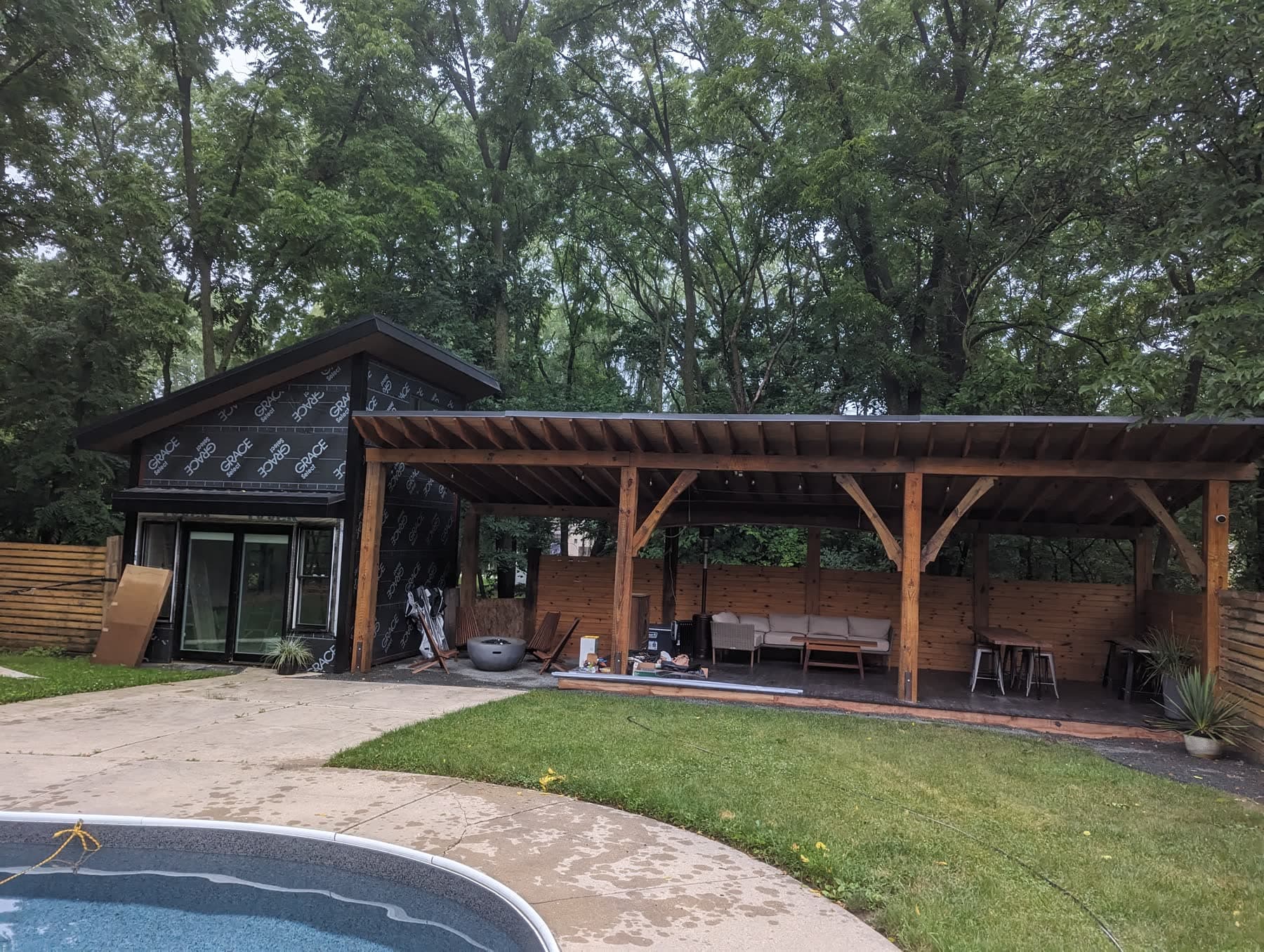
Deck builders in Milwaukee & SE Wisconsin.
We build decks the way a framer builds them — over-engineered from the footings up, by the same carpenter who quotes the job. New builds, full rebuilds, repairs, and re-decks. No call center, no salesman, no subcontractor you've never met. Just Dan Cleveland and a crew he works alongside.
Request a free estimate→Why homeowners hire Dan for their deck.
A deck looks simple from the surface boards up. It isn't. The part that decides whether your deck is still rock-solid in fifteen years — or sagging and pulling off the house in five — is the part you stop seeing the day it's finished: the footings and the ledger. That's where cheap decks fail. It's also where we do our best work.
We build off a solid base. Every time.
Written by Dan Cleveland, owner of Meat and Potatoes Carpentry — in the trades since 2001, in business since 2009, and a framer by training. Every deck on this page was built by Dan and the crew he works alongside.
Last updated June 2026
Owner-operated, quote to cleanup
Dan walks the yard. Dan gives you the quote. Dan is on the job the day we break ground. There's no handoff, no “your project manager will call you,” no subcontractor you've never met. One carpenter owns the whole build — design, footings, framing, decking, and the final walkthrough.
A framer building your deck
“I came up in the trades as a framer, so this is where we really have fun.” A deck is a structure before it's a surface, and Dan builds it like one. Posts, beams, joists, and connections done right from the ground — not shimmed, not eyeballed, not hidden under nice-looking boards.
Over-built on purpose
We're big believers in over-building the structure to outlast what you'd expect. Footings sized past the load. Ledgers fastened by the book. The connections most contractors rush, we slow down on. It costs us a little more time and gives you a deck that doesn't move.
Everything from the ground up — and everything on top.
Whether you're starting from bare yard or tearing out a deck that's seen better winters, we handle the whole job. New deck installation, full rebuilds, deck repair, and re-decking over a frame that's still sound. We tear out the old one and haul it away, too — you don't end up with a pile in the driveway.
- New deck construction
- Built from the footings up, designed around how you actually use your yard. Single-level, multi-level, walkout — you name it.
- Full deck rebuilds
- When the old deck is past saving, we tear it down, haul it off, and build new — often on fresh footings sized to today's loads.
- Deck repair
- Failing boards, soft framing, a loose ledger, wobbly stairs or railings. We fix what's worth fixing and tell you straight when it isn't.
- Re-decking
- Sound frame, tired surface? We re-deck over the existing structure in composite or wood and bring it back to new.
- Tear-out & haul-away
- The old deck leaves with us. No dumpster to rent, no debris left behind.
- Railings
- Aluminum, composite, or wood, including premade panel systems that let the deck do the talking.
- Stairs & multi-level layouts
- Steps, landings, and decks that step down with the grade of your yard.
- Built-in benches & planters
- Seating and greenery framed right into the deck instead of bolted on after.
- Pergolas & privacy walls
- Shade and separation, built to match the deck and stand up to wind.
- Deck lighting
- Stair, post-cap, and rail lighting wired in so the deck lives after dark.
- Screened & covered porches
- Turn the deck into a three-season room that keeps the bugs and weather out.
The materials we build with.
We build mostly in composite — Trex and TimberTech are our go-tos — but pressure-treated and cedar all have their place depending on your budget and your goals. We're certified, and we stay brand-diversified on purpose. Nine-plus years across these materials means we recommend what fits your deck, not whatever line we're locked into.
Trex
The composite we reach for most. Low-maintenance boards in a deep range of colors and grains, backed by a 25–50 year limited residential warranty depending on the line. A safe, beautiful default for a deck you don't want to babysit.
TimberTech
Our other composite go-to. Capped composite lines run 25–30 years; their AZEK PVC line carries a limited lifetime product warranty with a 50-year fade and stain warranty — the strongest in the industry.
Pressure-treated
The budget-friendly workhorse. Real structural value and the most affordable way to get a solid, well-built deck. The trade-off is more ongoing maintenance than composite.
Cedar & premium wood
Genuinely beautiful and warm in a way composite still can't fully match. Worth it when you love real wood and don't mind the upkeep that comes with it.
For railings we strongly recommend aluminum — specifically Harmony premade panel systems. They're clean, they're durable, and they let the shine and beauty of the deck come through instead of fighting it. We'll show you the options, but this is the one we point most homeowners toward.
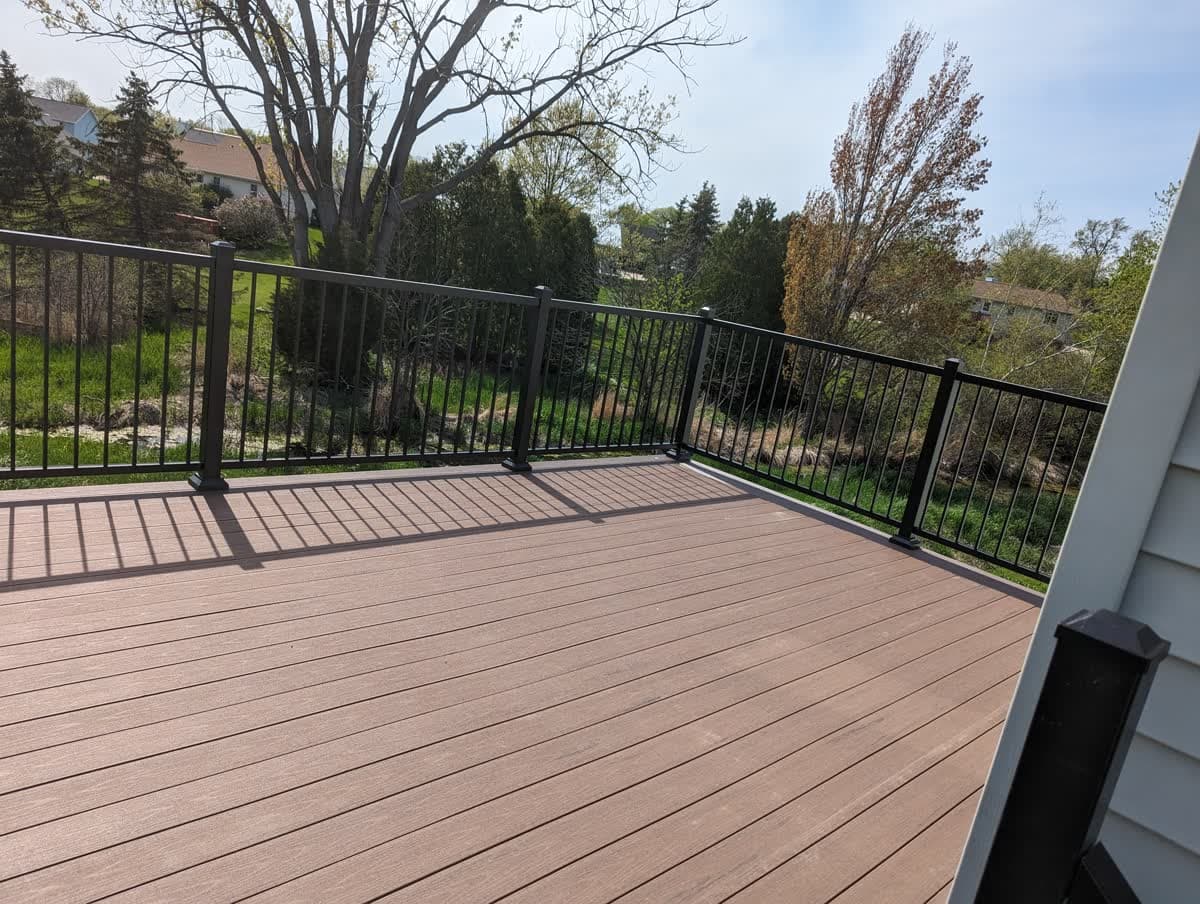
Composite or wood: which is right for you?
This is the first real decision on most decks, so here's the honest version. Natural wood is beautiful — but composite is where you get that showroom-quality finish every time. Wood asks for ongoing maintenance. Composite is low maintenance and holds up better long term. All three below are legitimate. The right one comes down to budget and how much upkeep you want.
Composite
A showroom finish on day one and on day 3,000 — no warping, no splintering, no annual staining. Just a wash now and then. It costs more up front, but for most homeowners the low maintenance and long-term hold make composite the safer call. Trex and TimberTech are our go-tos.
Cedar / Premium Wood
Genuinely beautiful, and unmatched if you love the look and feel of real wood. The trade-off is upkeep — wood needs periodic cleaning and refinishing to hold up to Wisconsin weather. Choose it because you want real wood, not because it's the easy option.
Pressure-Treated
The most affordable way to get a solid, well-built deck. The framing and the value are real. The trade-off, same as cedar, is more ongoing maintenance — and it won't hold a finish the way composite does. A smart pick when the budget leads the decision.
From first sketch to final walkthrough.
Here's exactly how a deck build runs, start to finish. The structural steps — footings and ledger — are the ones most homeowners never think about and the ones that decide everything. We walk you through all of it so there are no surprises and no mid-job “oh, by the way.”
- 1Ledger bolted to the house — the connection decks fail at
- 2Joists hung off the ledger, carrying the deck
- 3Beam spanning the posts at the outer edge
- 4Post down to the footing
- 5Goliath Tech pier, set below the 48" frost line
- № 01
Design
Most homeowners already know roughly what they want, and that's a great place to start. When you want to see it first, we offer full custom design in Google SketchUp — real renderings and color selections so you're choosing your deck on a screen, not guessing from a sketch. - № 02
Footings
We typically use Goliath Tech pier-style footing systems, over-engineered to exceed the load requirements — and they need no inspection. Wisconsin code requires footings four feet deep from grade, and anything within five feet of the house has to match your basement foundation depth. We hit those numbers, then build past them. - № 03
Ledger attachment
The ledger is the board that ties your deck to the house, and it's the single most important connection on the whole build. We attach it with LedgerLOK fasteners in a W-pattern sequence, per the Appendix B specs. This is the #1 thing cheap deck builders get wrong — and we do it by the book every time. - № 04
Permits & drawings
We walk you through the permit process and provide the drawings and design plans you need for it. No leaving you to figure out the paperwork on your own. - № 05
Layout decisions
Once the structure's set, the fun part: board layout, picture-framing options, and railing style. We get you informed on each choice so the look is yours, not a default. - № 06
Build & walkthrough
With the decisions made, the build runs seamless. We finish it, walk it with you, clean up, and haul off every scrap — including the old deck if we tore one out.
- · Lead time, small deck: 2–6 weeks
- · Lead time, medium/large: 4–10 weeks
- · Peak season (spring/summer): 8–16+ weeks
- · On-site build, small deck: 1–4 days
- · On-site build, medium deck: 3–7 days
- · On-site build, large/custom: 1–4+ weeks
We don't install decks November through March — Wisconsin ground conditions won't allow it.
How much does a deck cost in Wisconsin?
Most deck builders make you call to find out. We'll just tell you. These are real installed price ranges in Southeast Wisconsin, by material and size. Every range assumes a standard rectangular layout, basic railings, one stair set, standard treated framing, and the permit. The things that move you up: aluminum railings, composite fascia, hidden fasteners, picture framing, lighting, multi-level layouts, pergolas, and demo.
| Material · Installed | Small (10×12) | Medium (14×20) | Large (20×20+) |
|---|---|---|---|
| Pressure-Treated | $6,000–$10,000 | $10,000–$18,000 | $18,000–$30,000 |
| Cedar / Premium Wood | $8,000–$14,000 | $14,000–$24,000 | $24,000–$40,000 |
| Composite (Trex / TimberTech) | $12,000–$20,000 | $20,000–$38,000 | $35,000–$60,000+ |
Request a free deck estimate and we'll quote your actual deck — layout, material, and site — not a web-page average.
Built off a solid base.
Ask why a deck fails and the answer is almost always the same two things: the footings and the ledger. Those are the parts other contractors cut corners on — and exactly where we do our best work. Attention to detail from the foundation up isn't a tagline here. It's the whole reason our decks don't move.
- Footings sized past the load. Goliath Tech piers, over-engineered to exceed requirements and set to Wisconsin frost depth. We build past code, not to it.
- Ledgers fastened by the book. LedgerLOK fasteners in the correct W-pattern — the connection most builders rush, and the one most likely to fail when they do.
- Structure over-built on purpose. We over-build the framing to exceed longevity expectations, because the surface boards are only as good as what's holding them up.
- Detail from the foundation up. Where other contractors cut corners is where decks fail. That's the work we take the most pride in.
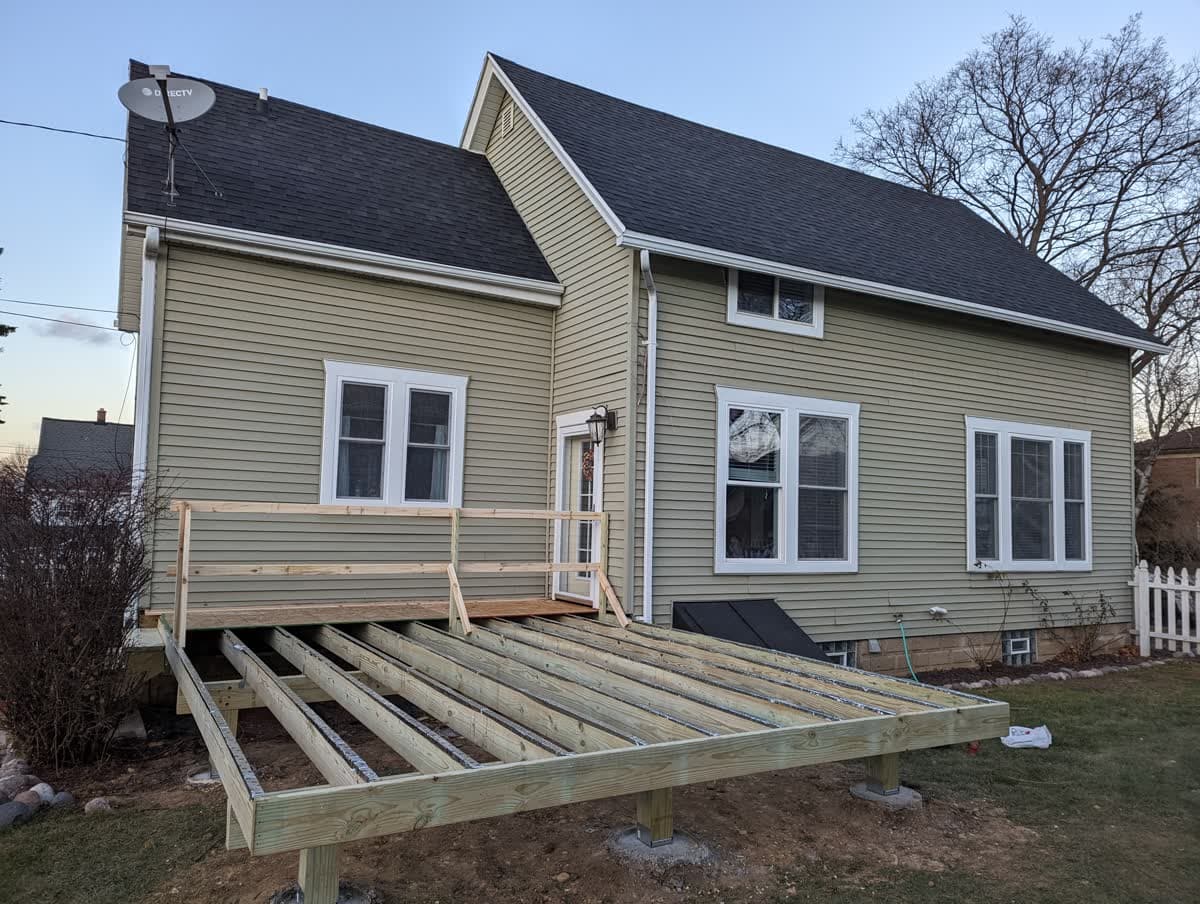
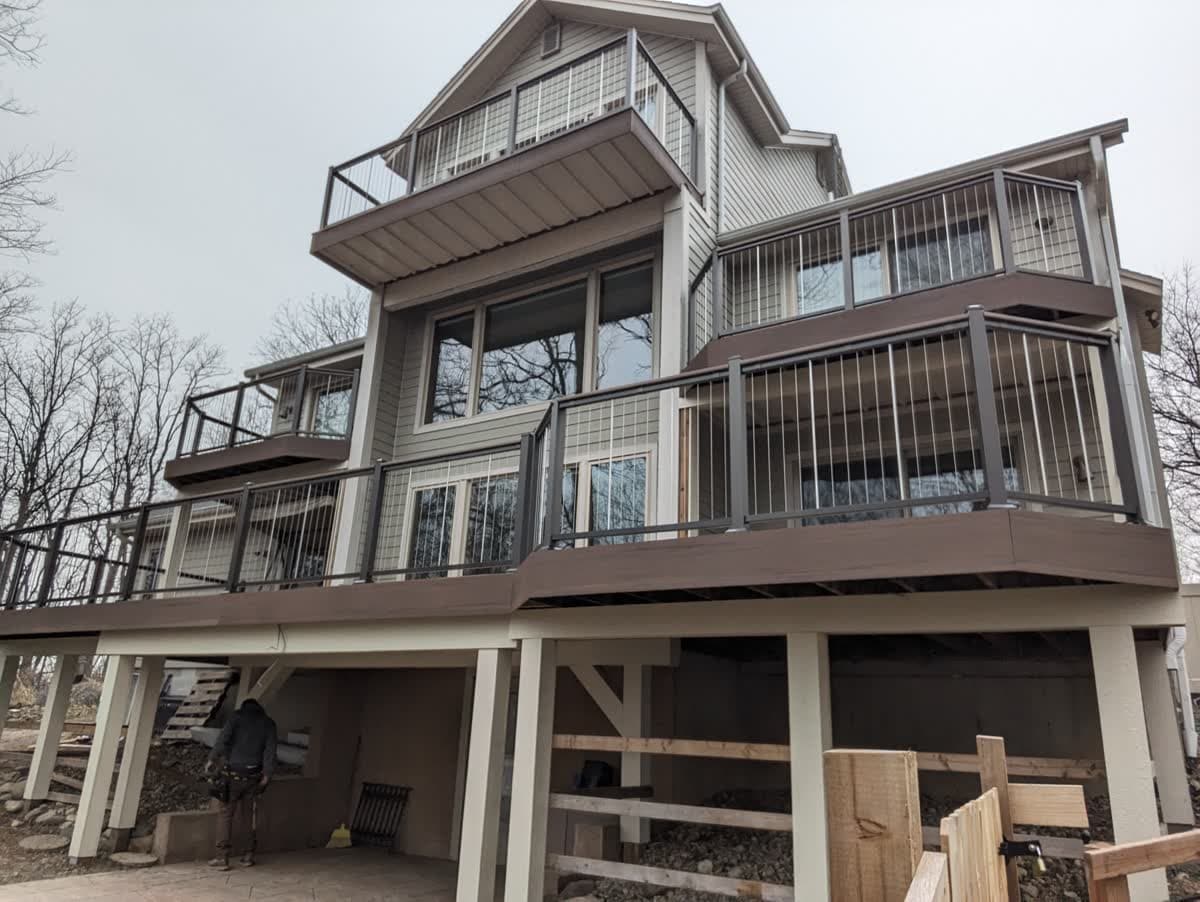
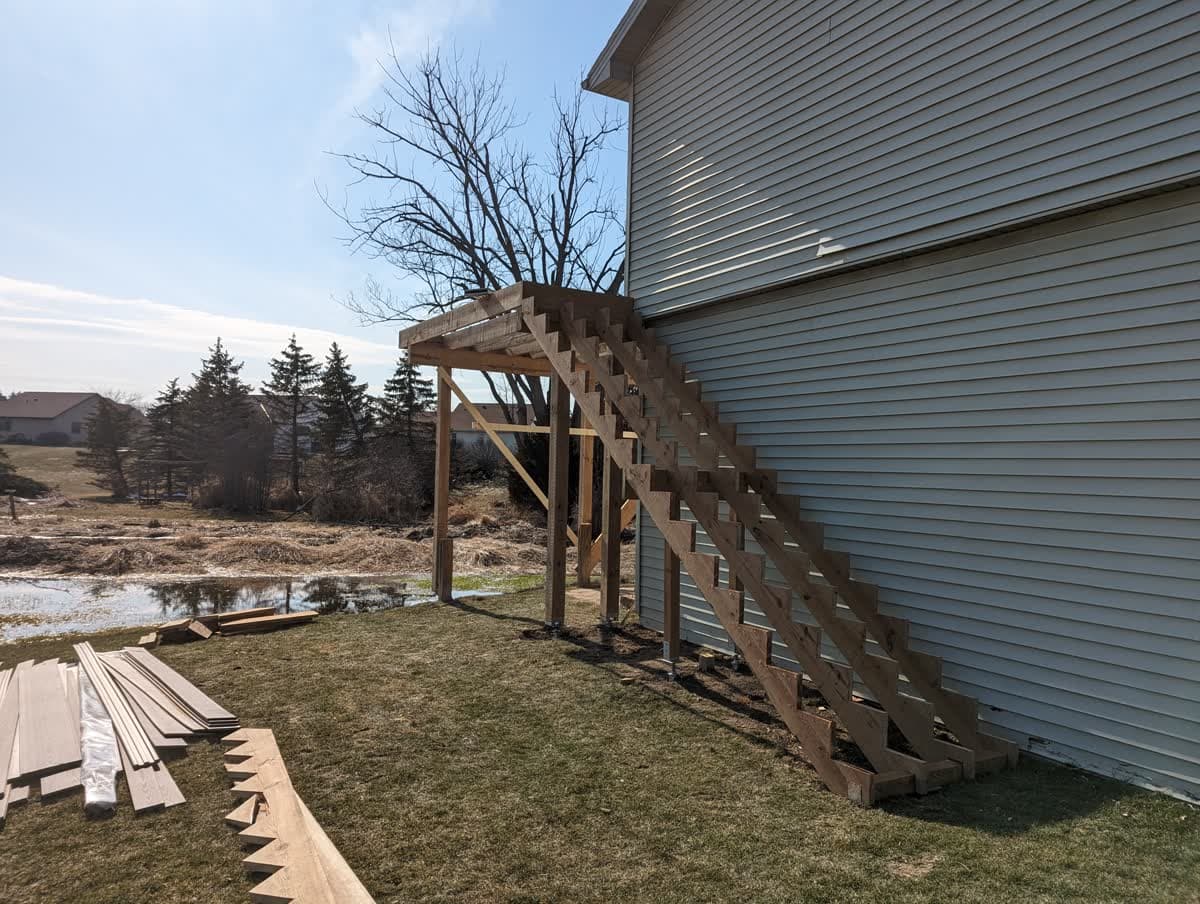
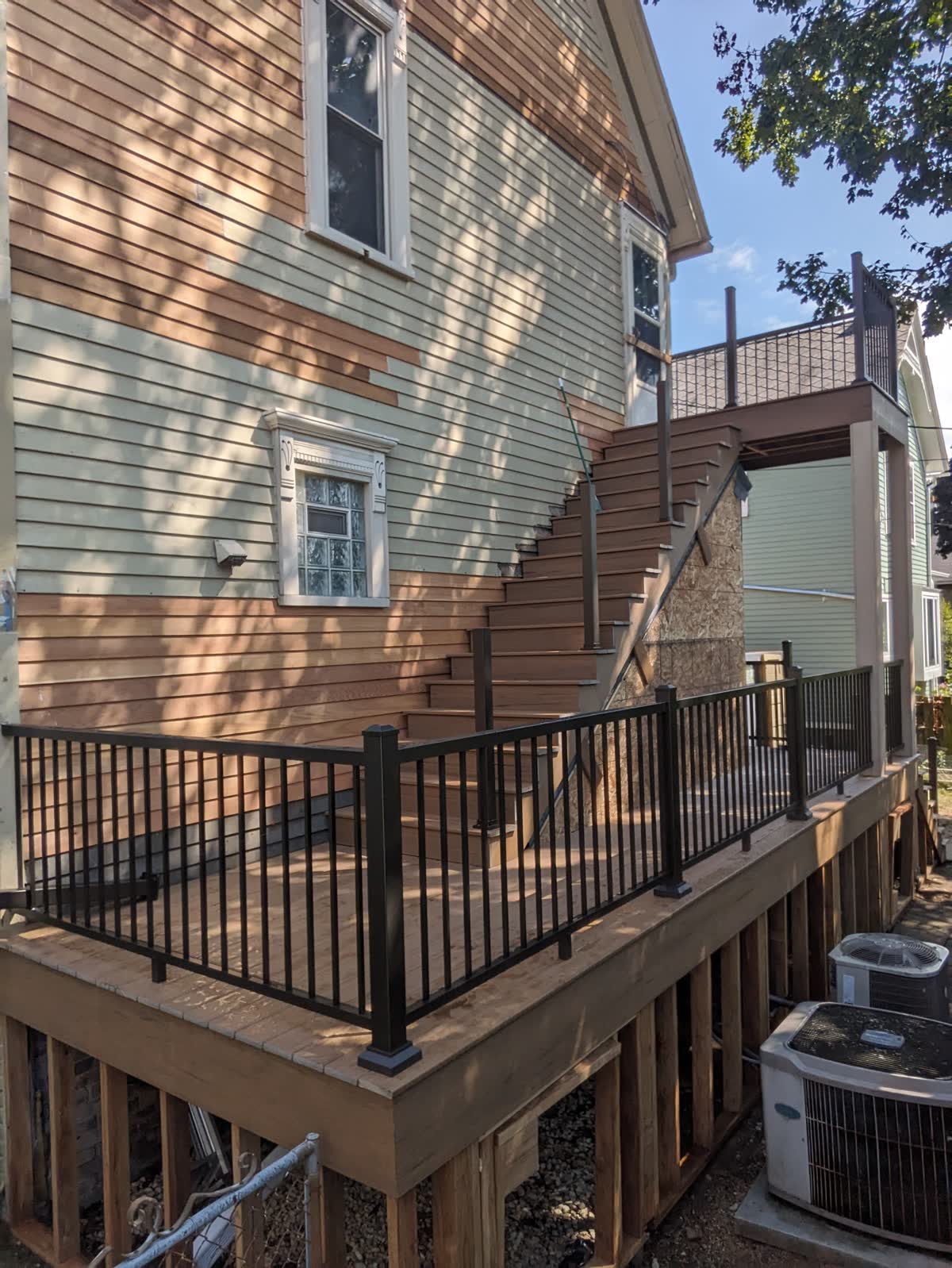
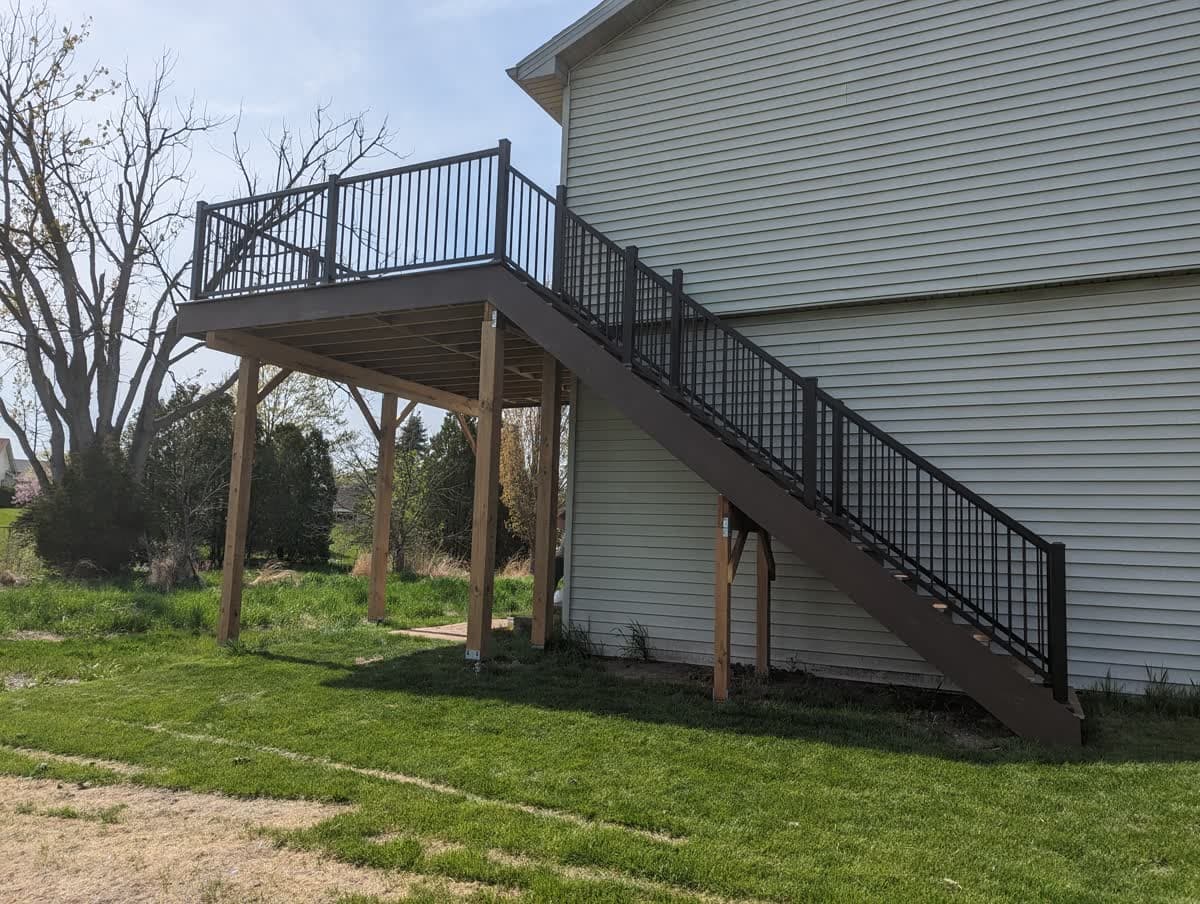
A few we've built.
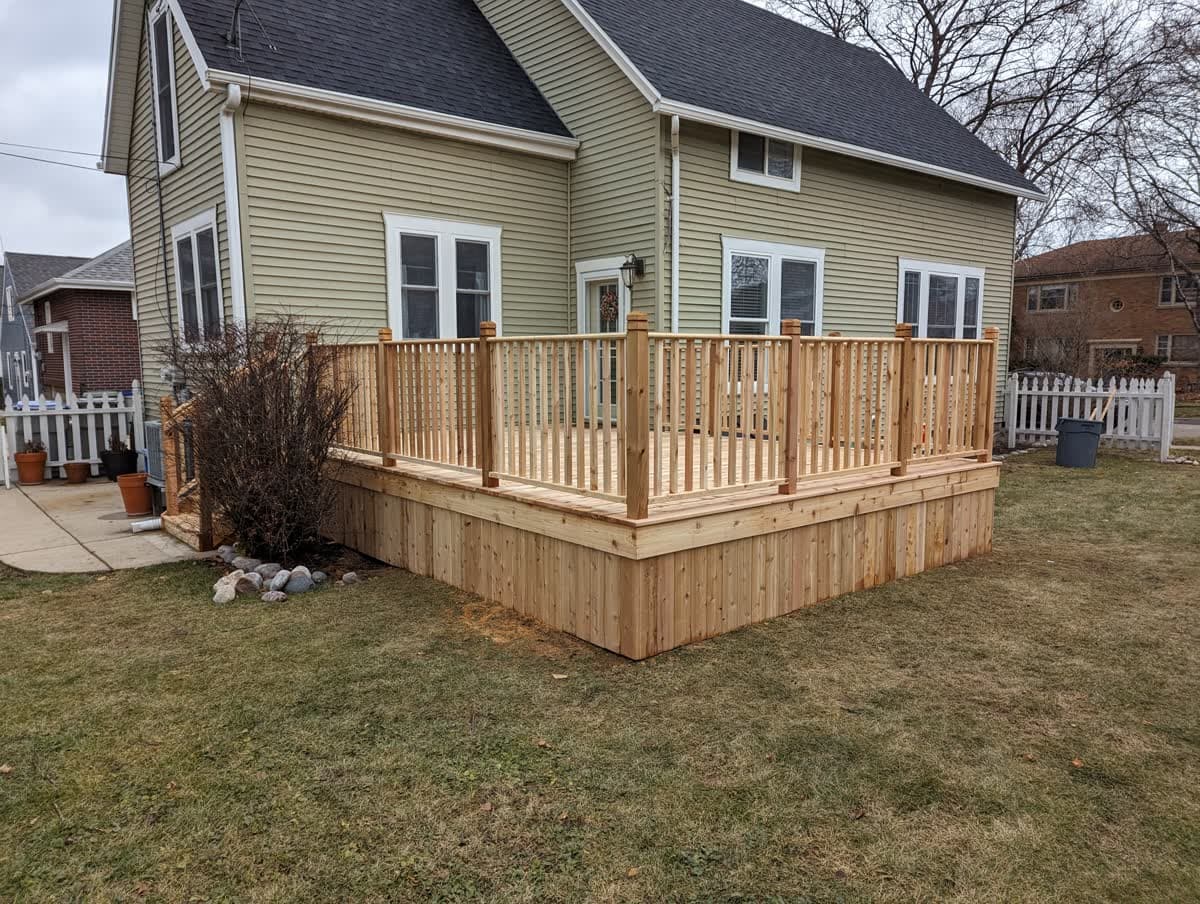
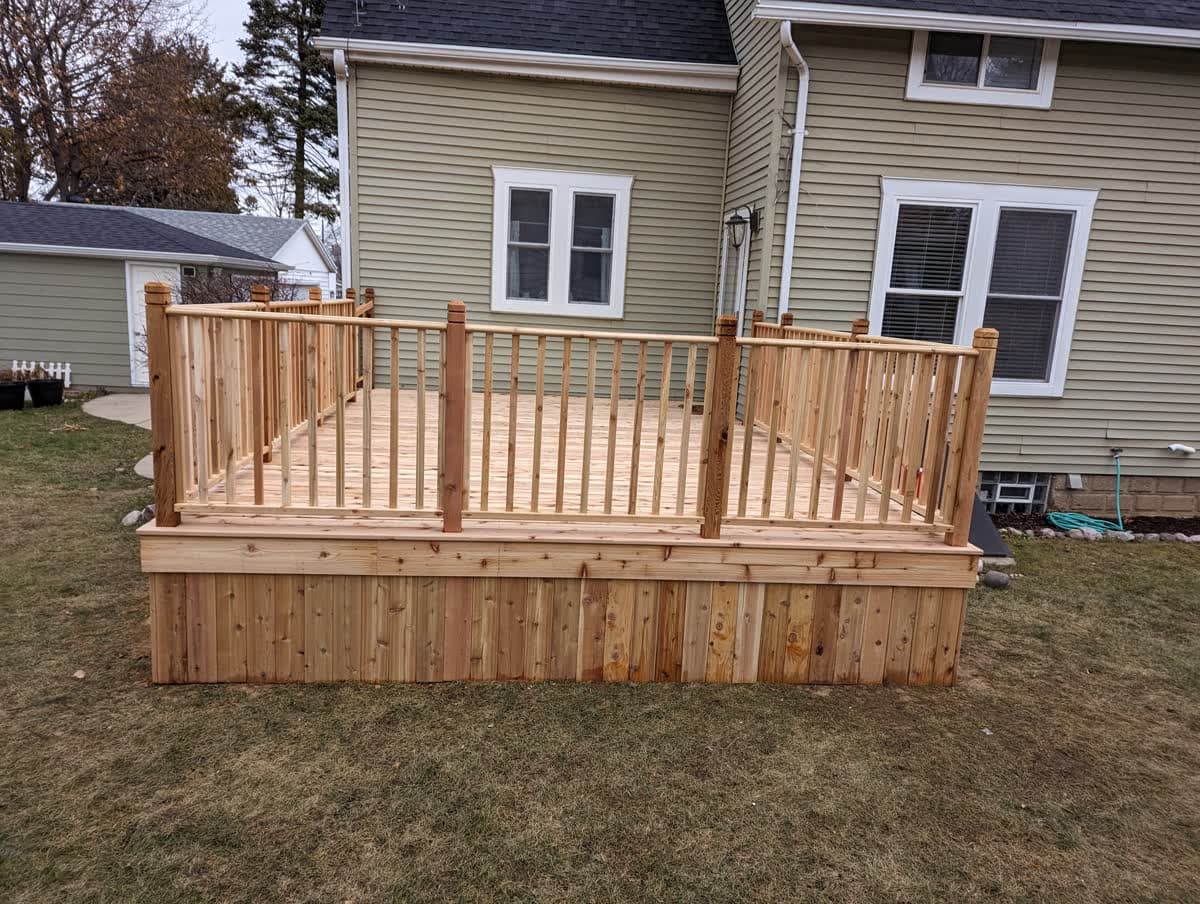
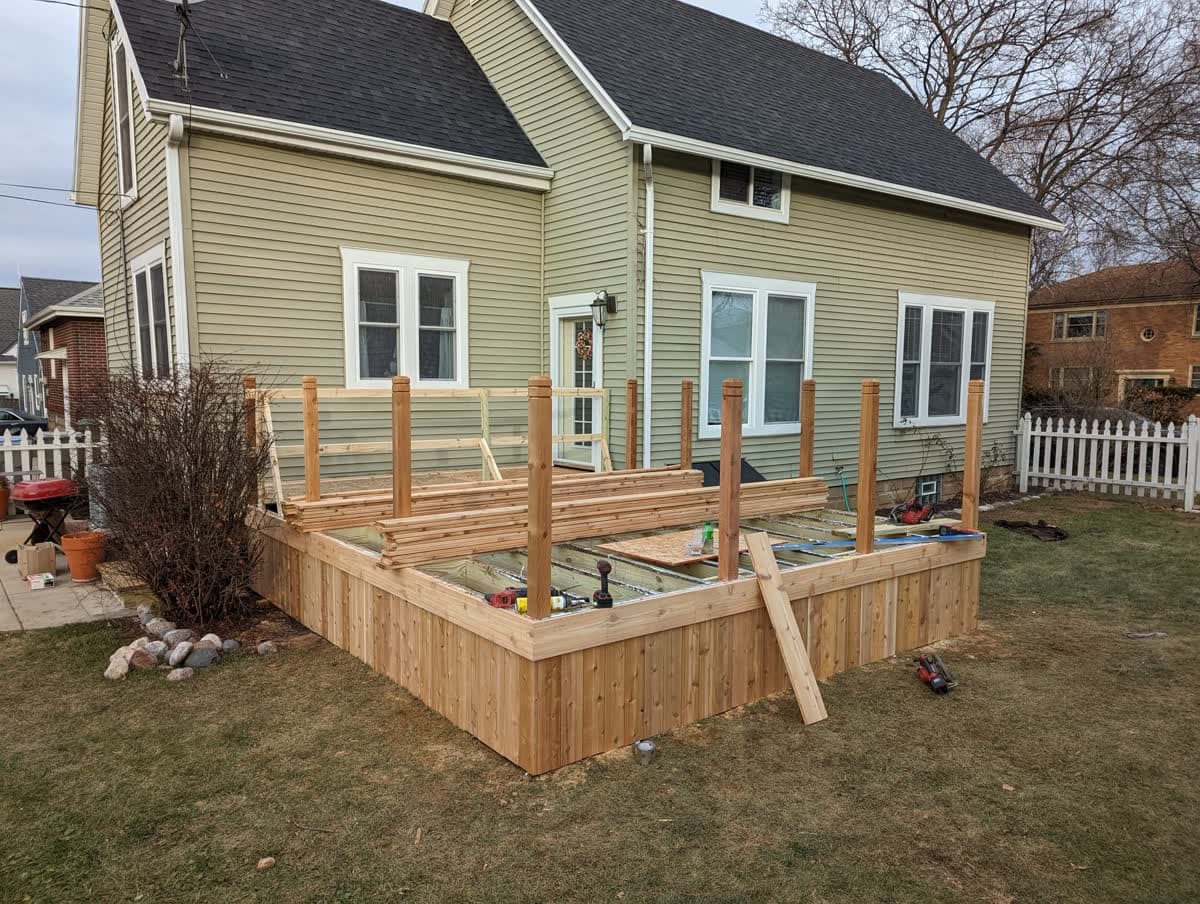
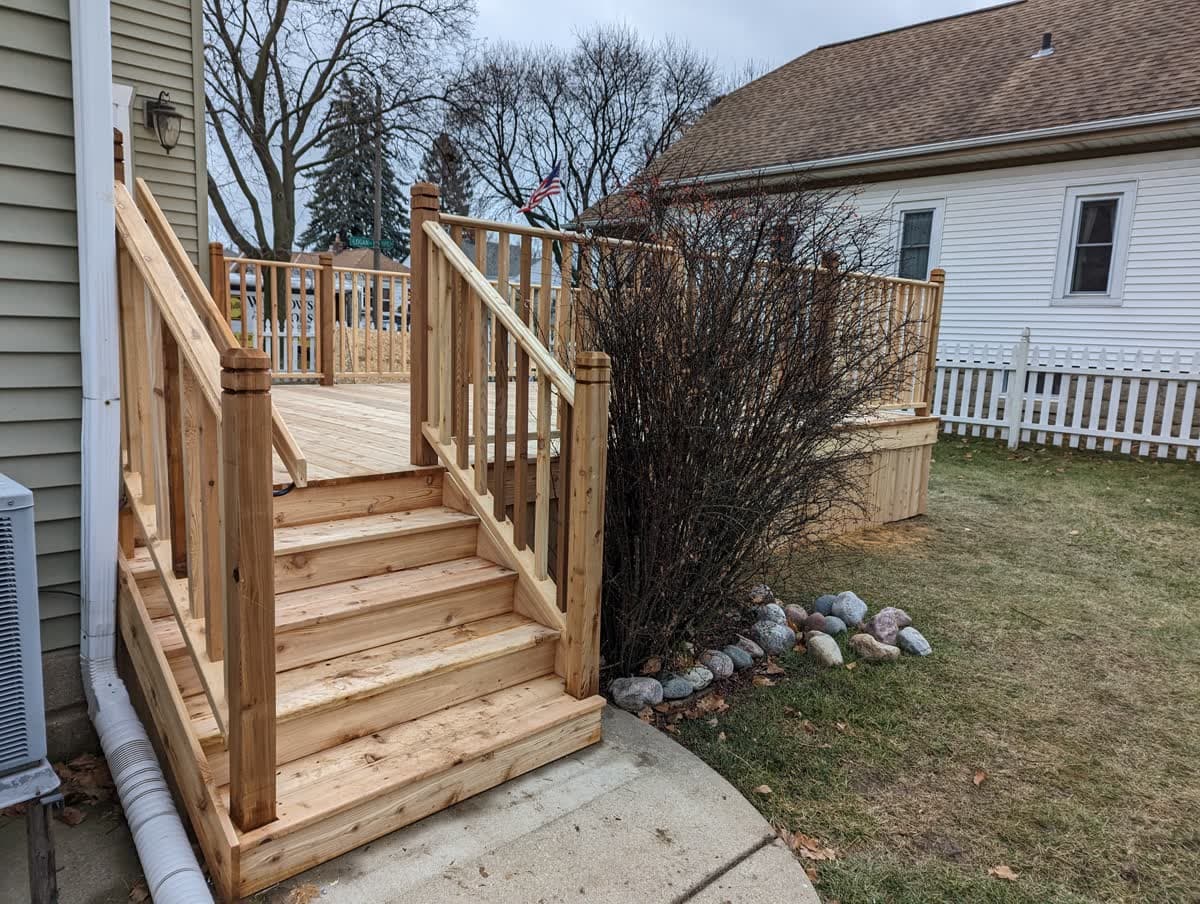
Composite and wood, single-level to multi-level, across Southeast Wisconsin. Most deck builders won't show you their structure — we're proud of ours.
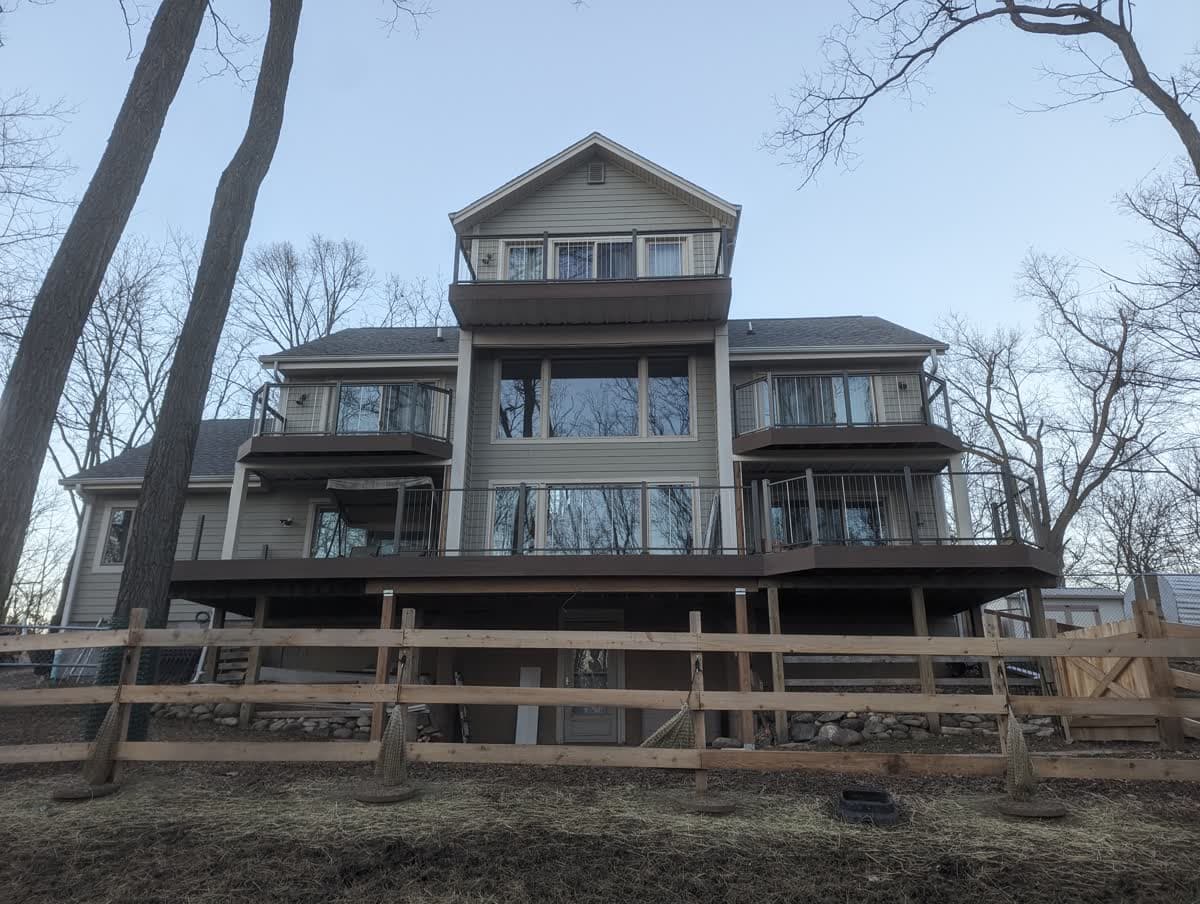
Two layers of coverage.
You get coverage on two fronts: our workmanship and the manufacturer's product. Here's exactly what each one means in years, so there's no guessing what's actually backed.
- Our 2-year workmanship warranty covers the build itself — the framing, connections, and craftsmanship that keep your deck solid, square, and standing the way it left us.
- Trex carries a 25–50 year limited residential warranty, depending on the product line.
- TimberTech composite lines run 25–30 years — and their AZEK PVC line carries a limited lifetime product warranty with a 50-year fade and stain warranty, the strongest in the industry.
Southeast Wisconsin.
We build decks across the Milwaukee metro and surrounding Southeast Wisconsin communities — including Milwaukee, Waukesha, Oak Creek, Brookfield, and New Berlin. If you're looking for a local deck builder in Southeast Wisconsin, there's a good chance we serve your area.
Milwaukee
We build decks throughout Milwaukee using composite options from Trex and TimberTech, as well as cedar and pressure-treated lumber. The right material comes down to your yard, how much upkeep you want, and your budget.
Oak Creek
Oak Creek is part of our Southeast Wisconsin service area. Whatever the material, the build starts underneath — footings set to Wisconsin frost depth and framing backed by Dan's experience as a framer. It's the part you don't see once the deck is finished.
Waukesha
Waukesha and the surrounding lake-country communities are part of our service area. We handle new builds, full rebuilds, repairs, and re-decks, with a two-year workmanship warranty plus manufacturer coverage where applicable.
Not sure if we cover your area? Ask us. If we don't, we might know someone good who does.
Frequently asked questions.
- Do I need a permit to build a deck in Wisconsin?
- Yes — most decks in Wisconsin require a permit, and we walk you through the whole process and provide the drawings and design plans you'll need for it. Wisconsin code also sets the structural rules we build to: footings four feet deep from grade, and any footing within five feet of the house has to match your basement foundation depth. We handle the code side so you don't have to.
- How much does a deck cost in Wisconsin? What about a 20×20 deck?
- Installed in Southeast Wisconsin, a small pressure-treated deck (about 10×12) runs $6,000–$10,000, cedar runs $8,000–$14,000, and composite runs $12,000–$20,000. A large deck of 20×20 or bigger runs $18,000–$30,000 in pressure-treated, $24,000–$40,000 in cedar, and $35,000–$60,000+ in composite. Those ranges assume a standard rectangular layout, basic railings, one stair set, and the permit. Aluminum railings, hidden fasteners, picture framing, lighting, multi-level layouts, and pergolas move the price up.
- Composite vs. wood — which is better?
- For most homeowners, composite. Natural wood is beautiful, but composite is where you get that showroom-quality finish every time, and it's low maintenance and holds up better long term. Wood — cedar especially — looks and feels genuinely better to a lot of people, but it needs ongoing cleaning and refinishing to survive Wisconsin weather. Pick wood because you love real wood. Otherwise composite is the safer, lower-maintenance call.
- Can you rebuild on my existing footings?
- Often, yes — as long as the weight load and the footprint don't change, your existing footings can carry a new deck. That said, we usually recommend new footings regardless. They're the foundation of the whole structure, and on a deck you'll keep for decades, it's the place we'd rather not inherit someone else's shortcuts.
- When can I stain a new cedar deck?
- Within six months of install. A new cedar or wood deck needs a little time to weather before it'll take a finish properly, but don't let it go much past six months or you start losing protection. We'll tell you the right window for your specific boards.
- How do I maintain a composite deck in winter?
- Always use a plastic shovel — never a metal blade. A metal edge will scratch and damage the surface of a composite deck. A plastic shovel clears snow without marking the boards, and that's really the whole trick. Composite is low-maintenance year-round; winter is just about that one rule.
- What time of year do you build decks?
- April through October, give or take the weather. We don't install decks November through March — Wisconsin ground conditions won't allow proper footings in frozen earth, and we won't cut a corner to work around it. If you want a deck for next summer, the best time to get on the schedule is the off-season, before spring fills up.
- How long does it take to build a deck?
- On site, a small deck takes 1–4 days, a medium deck 3–7 days, and a large or custom deck 1–4+ weeks. Lead time before we break ground runs 2–6 weeks for a small deck and 4–10 weeks for medium or large — longer in peak spring and summer, when it can stretch to 8–16+ weeks. We give you a realistic window when you book and flag any slippage right away.
Five stars on Google.
Verified reviews from homeowners across our work — the same crew, communication, and attention to detail you'll get on your deck.
“Dan is timely, professional, communicative, friendly, precise, reliable, and does absolutely perfect work. He is basically everything you want in a person that works in your home. I give Meat and Potatoes Carpentry an A+. Highly recommend!”
“We have used Meat and Potatoes Carpentry several times and they never disappoint! Professional, fast and very reliable! Their attention to detail is next level. Highly recommend!”
“Professional, conscientious, kind, integrity of work. Would hire him on the spot.”
A real quote from Dan — not a call center.
Same-day response most weekdays. No pressure, no sales pitch — just an honest look at your yard, straight talk on materials and budget, and a clear price. The carpenter who quotes your deck is the one who'll build it.
Request a free estimate→